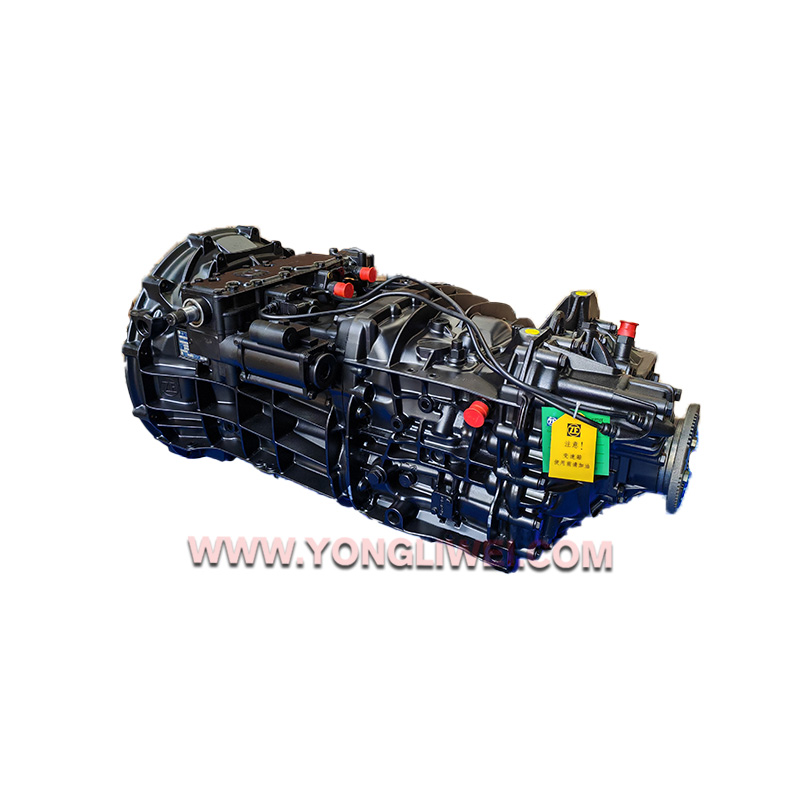
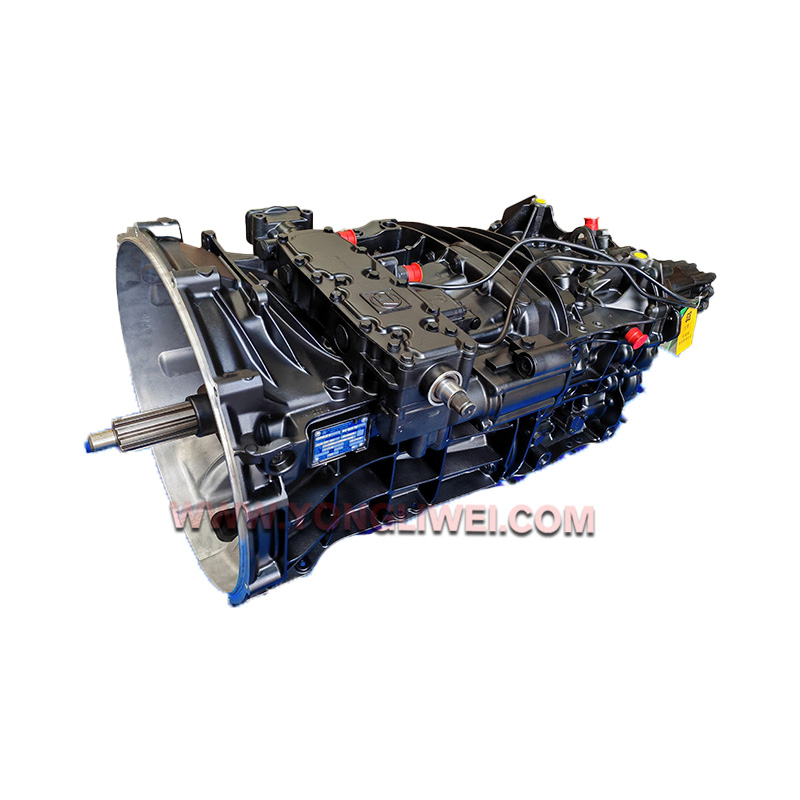
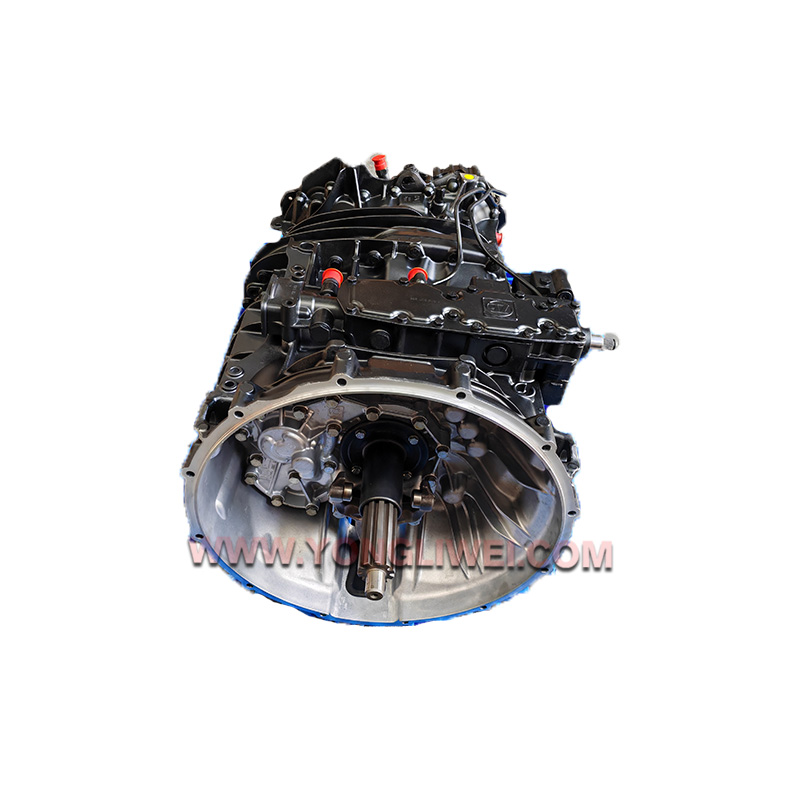
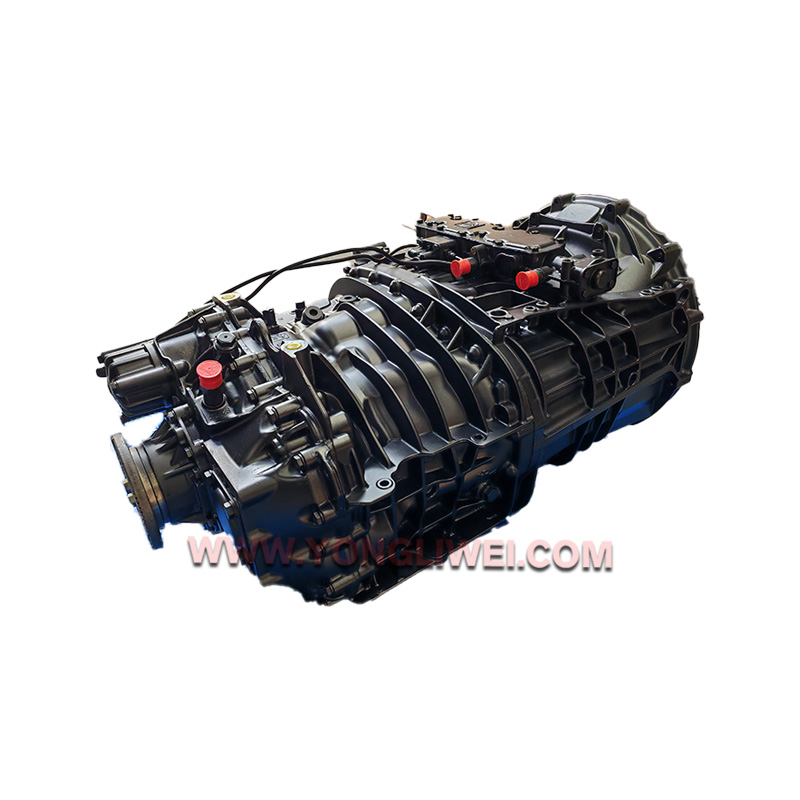
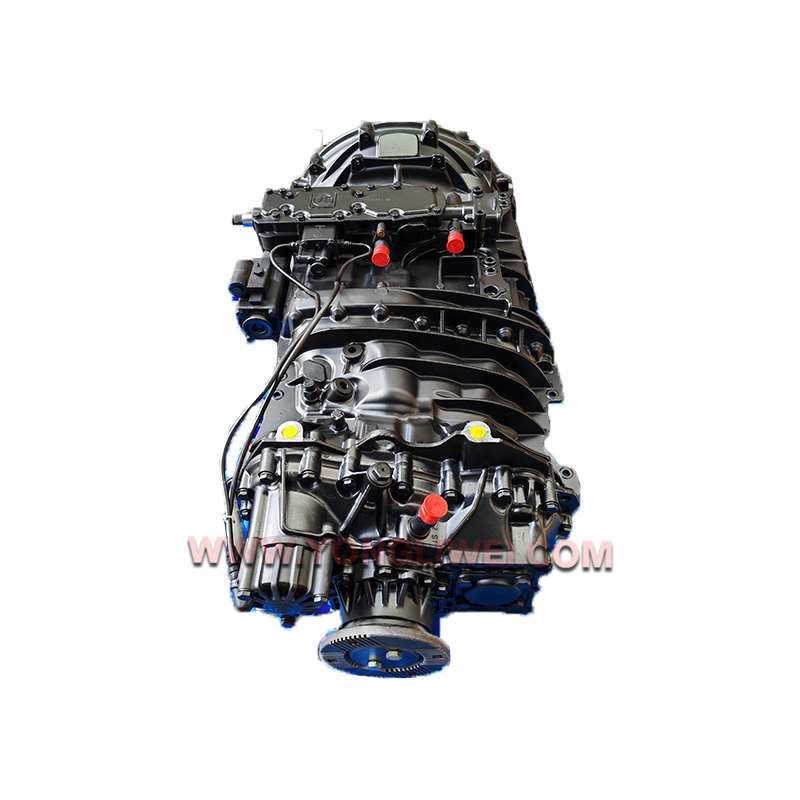

Transmission Series: ZF ECOSPLIT 4 (Generation 4 Heavy-Duty Truck Range)
Model Designation: 8S1930TD
Assembly Part Number: 1356081154 / 1356.081.154
Transmission Type: Fully Synchronized Manual Shift Gearbox
Clutch Actuation Structure: Integrated Bell Housing with Pneumatic Shifting Assistance (Servoshift)
Maximum Input Torque (Direct Drive): Up to 2,300 Nm (Approximate limit pending vehicle configuration)
Maximum Input Torque (Overdrive): Up to 2,500 Nm (Application dependent)
Gear Ratio Sequence: Finely tuned gear steps optimized for high gross vehicle weights (GVW)
Gearbox Structure: Main Gearbox (housing 4 forward speeds and 1 reverse speed) coupled with an integrated Front Splitter (Split Gearbox) and Rear Range Gearbox.
Total Gear Configuration: 16 Fully Synchronized Forward Gears and 2 Reverse Gears (derived via Range and Split combinations).
Countershaft Axial Clearance: 0.01 mm to 0.10 mm (Adjusted accurately via high-precision shims)
Main Shaft & Input Shaft Axial Clearance: 0.01 mm to 0.10 mm
Split Ring Axial Clearance: –0.05 mm to +0.05 mm (Strict feeler gage calibrated)
Housing Structural Material: Advanced, weight-optimized Die-Cast Aluminum Alloy Housing
Lubrication System: Splash lubrication system for internal gear sets and high-load rolling bearings.
Oil Capacity Reference: Application-specific volume, requiring strict grade-verified industrial gear lubricants.
Anti-Corrosion Surface Treatment: Coated with standard factory protective industrial paint; blank mechanical coupling faces, output flanges, and input shaft splines are fully protected via rust-preventative compounds.
The ZF 8S1930TD 1356081154 unit is engineered as a highly adaptable manual transmission. It serves as an exact OEM replacement or upgrade for multiple commercial vehicle brands globally.
Truck Brand / ManufacturerSpecific Vehicle Model SeriesCompatible Engine / Power RangeApplication Use-CaseDongfeng Heavy TrucksTianlong Series , KX/KL Cargo & Tractor Heavy Trucks340HP - 420HP Turbo Diesel EnginesLong-Haul Logistics, Intercity Cargo DistributionVolvo TrucksFM Series, FMX Construction Truck VariantsD11 / D13 Engine PlatformsCommercial Fleets, Regional Heavy FreightMAN TrucksTGS Series, TGX Long-Haul Tractor UnitsD20 / D26 Common-Rail EnginesHeavy Infrastructure Logistics, Container TransportIvecoStralis, Trakker Heavy Mining & Tiper TrucksCursor 9 / Cursor 11 PowertrainsOn-Road Freight, Off-Road Aggressive Terrain MiningDAF TrucksCF Series, XF Flagship Freight MoversPACCAR MX EnginesCross-Border Logistical Services, Heavy HaulageYutong / Coach BusesPremium Intercity Coaches & Long-Distance Transit BusesRear-Engine Dedicated PowertrainsHigh-Capacity Commercial Passenger Transport .
The Input & Splitter Stage: Torque enters from the engine clutch disc through a high-precision splined input shaft. The front split gearbox splits each main gear ratio into an overdrive or direct-drive variant, allowing minor step adjustments to match changing road gradients without losing turbocharger boost pressure.
The Main Gearbox Core: Incorporates a dual-countershaft design. Splitting the input torque across two parallel countershafts allows the radial forces acting on the main shaft bearings to cancel each other out. This reduces bearing stress, shrinks gear diameters, and extends internal transmission lifetimes.
The Rear Range Planetary Assembly: Positioned immediately prior to the output flange, the range gearbox utilizes heavy-duty planetary gear wheels to multiply output torque extensively in the low-range gear selection. When switching to high-range, the planetary set locks into a 1:1 direct coupling ratio for efficient, high-speed highway cruising.
Sealing & Protection Systems: An axial mechanical face seal is integrated between the stationary casing sections and the rotating output elements. This seal system locks lubrication oil in while acting as a barrier against moisture, mud, abrasive sand, and environmental dust.
Coordinate Measuring Machine (CMM) Inspections: Every machined mounting face, bearing seat diameter, and shaft alignment vector is audited on a sub-micron 3D CMM platform to eliminate housing distortion risks.
Axial Clearance Verification: Technicians utilize precise electronic depth gages and calibrated feeler gages to adjust countershaft and main shaft axial plays precisely within the 0.01 mm – 0.10 mm window using specialized shims.
No-Load Automated Dyno Testing: The complete assembly is mounted onto our closed-loop dynamic testing rig. The unit is spun up through its entire 16-speed range to audit gear synchronization times, Servoshift response speeds, and shifting smoothness.
Acoustic & Vibration Mapping: High-sensitivity acoustic sensors pick up vibration frequencies across multiple rotation speeds. Any gear mesh resonance exceeding standard dB limits results in immediate rejection and internal gear set re-matching.
Pneumatic Casing Seal Evaluation: The internal air cavities of the transmission housing are pressurized to verify the casting integrity and ensure that all paper gaskets, liquid sealants, and radial shaft seals are leak-proof.
Pneumatic Control System Testing: The integrated shifting valves, range selector cylinders, and splitter pistons are tested under high actuation pressures to guarantee reliable execution under extreme operation stresses.
Primary Treatment: All raw metal contact points (input splines, output flanges, mounting holes) are heavily layered with a vapor-corrosion inhibitor (VCI) oil compound and wrapped in multi-layer moisture-proof plastic film.
Enclosure Structure: The gearbox unit is securely anchored onto a custom-contoured internal wooden cradle within a heavy-duty, heat-treated ISPM-15 compliant export plywood crate. This structural design prevents shifting or impact damage during transit.
Physical Protection: The crate interior is fortified with high-density shock-absorbing expanded foam sheets to cushion the transmission against heavy ocean swells, sudden braking events during rail transport, or aggressive forklift manipulation.
Production & Supply Capacity: 30 pcs/month (Consistent manufacturing output ensuring steady availability for wholesale international buyers and large regional fleet networks).
Standard Manufacturing Lead Time: Within 7 to 15 business days for standard configurations (Custom auxiliary attachments or specific PTO configurations may require extended processing).
Global Export Terms: Supported trade conditions include FOB (Free on Board), CIF (Cost, Insurance, and Freight), EXW (Ex Works), and DDP (Delivered Duty Paid), with direct departures from primary international deep-water seaports.
Oil Grade Compliance: Never fill the gearbox with substandard or non-specified industrial lubricants. Use only high-performance, fleet-certified heavy manual transmission fluids that explicitly meet factory lubrication classifications.
The Danger of Additives: Do not mix aftermarket chemical additives into the transmission lubricant. Unauthorized friction modifiers can coat the synchronized brass rings, causing synchronizer slippage, gear clashing, and accelerated internal damage.
Initial Break-In Flush: For brand-new or fully reconditioned units, execute the first complete transmission oil flush and oil change after the initial 5,000 to 10,000 kilometers of road operations. This clears away minor microscopic metal particles generated during early gear run-in.
Standard Fleet Service Interval: Under standard long-haul over-the-road transport applications, execute oil flushes every 120,000 kilometers or once per calendar year, whichever threshold is crossed first.
Severe Duty Cycle Interval: For vehicles operating under heavy vocational duty cycles—such as mining dump trucks, concrete mixers, or construction vehicles operating in dusty terrains—reduce the oil change interval to every 50,000 kilometers or every 6 months to avoid premature gear pitting.
Daily Visual Inspection: Check the lower casing split lines, drain plugs, and the input/output shaft seals for signs of active lubrication weeping or oil leaks.
Air Supply System Maintenance: Regularly check the vehicle’s compressed air drying filters. If excessive moisture passes into the transmission’s pneumatic Servoshift control lines, it can trigger corrosion inside the actuator control cylinders, causing delayed or sticky gear engagements.
Root Cause A: Low operating pressure within the vehicle’s auxiliary pneumatic system or a failing Servoshift pneumatic cylinder.
Correction Step: Connect a pressure gage to the auxiliary air reservoir loop. Verify that air supply pressure to the transmission actuator meets factory specifications. Replace damaged air lines or the Servoshift cylinder if internal seals are leaking.
Root Cause B: The vehicle clutch is dragging or failing to disengage completely, preventing smooth gear speed synchronization.
Correction Step: Inspect and adjust the clutch master cylinder fluid levels, bleed air from the hydraulic lines, and verify that the clutch pedal stroke matches manufacturer clearances.
Root Cause A: Insufficient transmission lubricant level or complete oil breakdown due to extended service intervals.
Correction Step: Park the truck on an even surface. Remove the side oil-level check plug and verify that the fluid rests flush with the lower lip of the inspection hole. Top off with certified gear oil or perform a complete fluid flush if the oil is dark or oxidized.
Root Cause B: Continuous high-load operations or towing at slow speeds over mountain trails without adequate cooling airflow.
Correction Step: Allow the vehicle to idle in neutral to dissipate heat through the transmission housing surface, or integrate an optional auxiliary transmission oil cooling loop.
Root Cause A: Internal gear tooth fatigue, pitting, or chipping resulting from prolonged heavy-torque exposure.
Correction Step: Drain a sample of transmission fluid and pass it over a magnetic separator. If dense collections of sharp metallic flakes are captured, remove the transmission assembly for an internal gear set inspection.
Root Cause B: Main shaft or countershaft rolling bearings are worn, pitted, or have excessive axial play.
Correction Step: Remove the inspection covers and evaluate the shafts for radial or axial movement. Re-shim the bearing clusters back to the precise 0.01 mm – 0.10 mm manufacturing limits.
To ensure clear, rapid processing of your commercial wholesale orders and to guarantee an exact matching variant for your heavy vehicle fleet, please follow our international purchasing protocol below:
Step 1: Provide Verification Data: When submitting your initial inquiry via our commercial communication channels, please provide the exact manufacturer assembly part number stamped on your old transmission’s identification plate (e.g., 1356081154). If the identification plate is missing, please provide the exact Vehicle Identification Number (VIN) along with clear photos of the casing layout.
Step 2: Commercial Quotation: Our team will issue a comprehensive Pro-Forma Invoice outlining unit costs, global transport pricing matrixes, expected manufacturing timelines, and available regional shipping options.
Step 3: Quality Lock-In: Every purchase is backed by our full international warranty against casting imperfections or assembly defects.

8S1930
Generally, in-stock items can be shipped within fifteen days, while some that require preparation time can be inquired about in detail.
Our product quality is very good, all are original factory parts.
We will guarantee that your product has a three-month shelf life, and we can discuss the details.
one